Sjöberg Bildbyrå AB
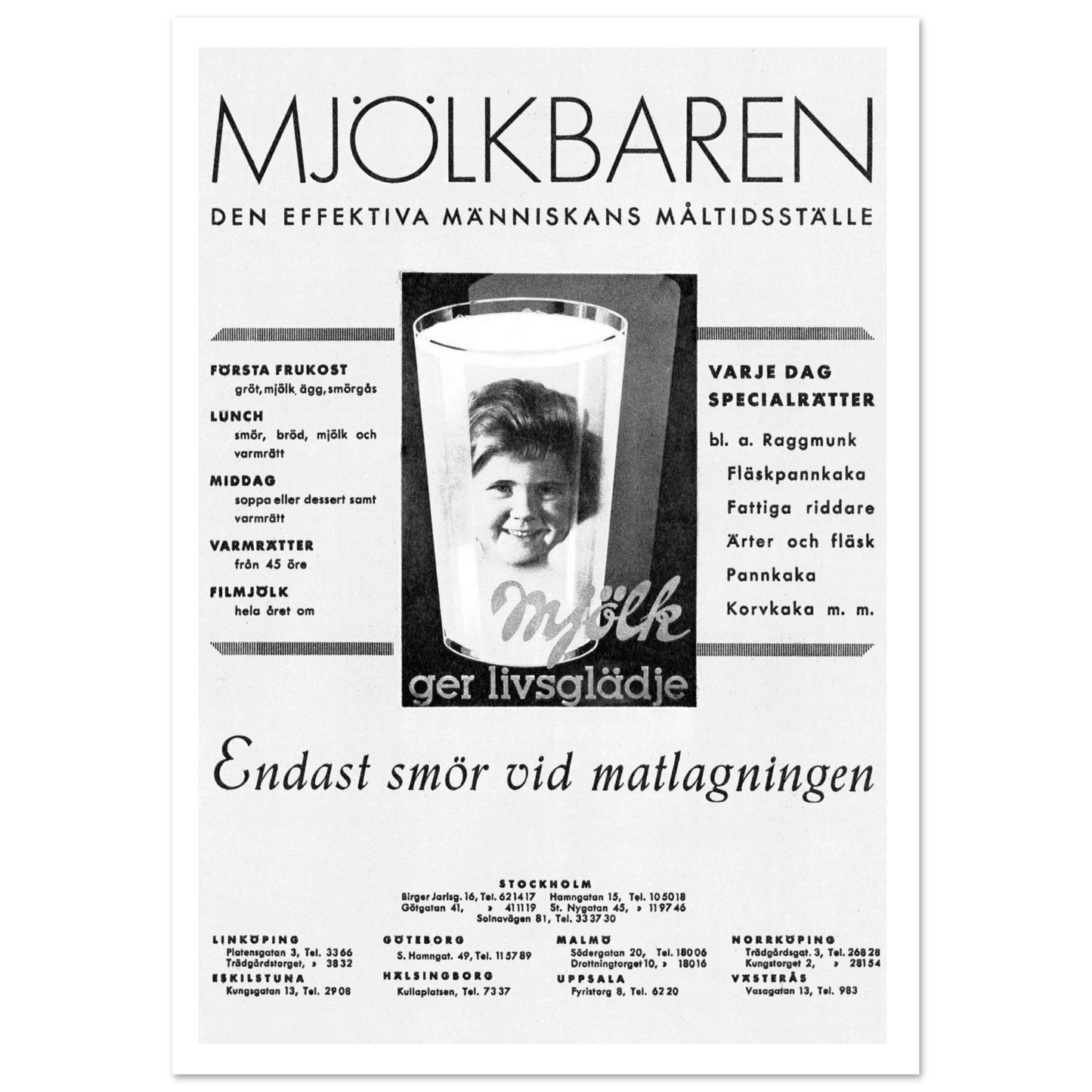
The Milk Bar 1940 - Premium poster with matte paper
Choose whether you want to order the image printed within a white frame or as a full-bleed image. Depending on the format, the image may be cropped differently.
Regular price
€44,95 EUR
Regular price
Sale price
€44,95 EUR
Unit price
per
Tax included.
Shipping calculated at checkout.
Couldn't load pickup availability
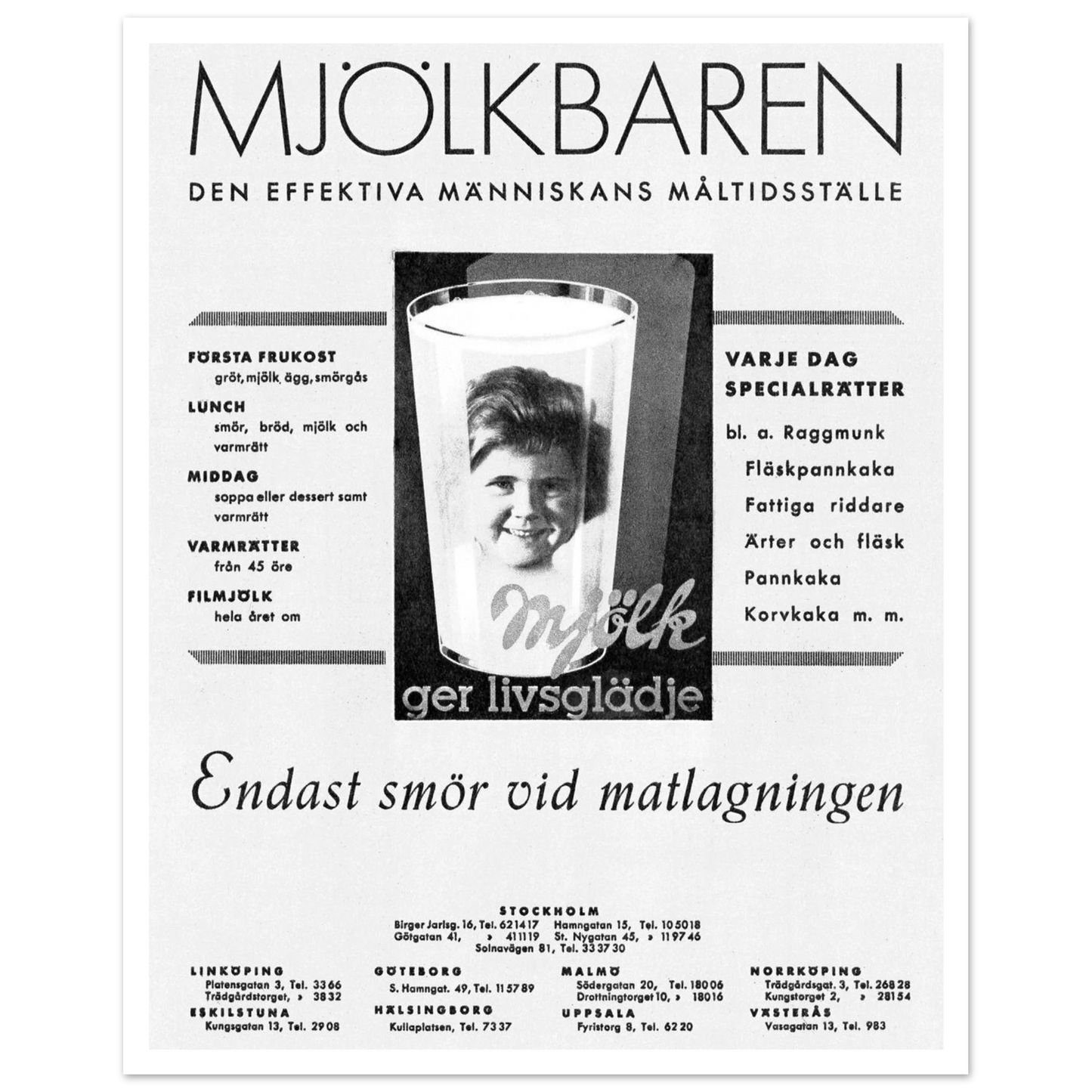
Poster with a picture of an advertisement for the Milk Bar in 1940.
The Milk Bar 1940 – A tasty journey through time to the heart of the public home.
War is raging in Europe, but in Sweden it is the glory days of the people's home, and in the middle of society the Mjölkbaren stands as an obvious gathering place. Here, in a world of teak furniture, checkered tablecloths and the smell of freshly brewed coffee, everyone – from factory workers to office ladies – gathers to eat, laugh and drink… yes, that's right, milk!
The Milk Bar Phenomenon – Milk as fashion and food as comfort.
Milk bars began to appear in Sweden in the 1920s, inspired by the American "milk bars" where the dairy industry wanted to make milk a popular drink. In 1940 they were at their absolute peak – in every small town there was a milk bar, and they functioned as a kind of sober alternative to the tavern. Here they did not serve alcohol, but cold milk in tall glasses, often with a dollop of lingonberry jam on the plate next to it. It was a place where you could eat cheaply, quickly and heartily – perfect for a time when many Swedes still lived simply but dreamed of something better.
Imagine walking into the Mjölkbaren early one morning in 1940. It's already bustling at eight o'clock – workers heading to work have taken their seats at the counter, and a group of young women in hats are giggling in a corner over the day's gossip. Behind the counter stands a smiling hostess, perhaps in a floral dress and apron, ready to take your order. On the wall hangs a chalkboard with the day's menu, written in chalk in a squiggly style: meatballs with cream sauce, fried pork with onion sauce, and raggmunk with lingonberries. All for just 50 öre – a bargain, even for an ordinary worker's wallet!
The food – Home cooking that warms the soul
The Mjölkbaren menu is a declaration of love for the Swedish home cooking. Here there are no frills, but food that fills and comforts. The meatballs are hand-rolled and served with a smooth cream sauce that makes you forget the worries of the world. The fried pork with onion sauce is a favorite among the old men at the counter – it crunches wonderfully between your teeth, and the onion is sweet and caramelized. The raggmunken, golden brown and crispy, comes with a generous dollop of lingonberries – a perfect balance between salty and sweet. And with all this? A glass of ice-cold milk, of course! For those who want to splurge, there is coffee or juice for a few öre extra.
The atmosphere – A place for community
The Mjölkbaren is not just a place to eat, it is a social hub. Here laughter and conversation mix around the tables, and it is not uncommon for someone to take out a newspaper to read aloud the latest news from the front. In the background, you might hear a radio playing a hit – why not "Min soldat" by Ulla Billquist, which has just been released on record and is on everyone's lips? Children run around between the tables, and an older gentleman in a hat discusses politics with the hostess. It is a place where everyone feels at home, regardless of whether you are a regular or just visiting.
Why the Milk Bar was loved
The 1940 Milk Bar is more than just a place to eat – it is a symbol of a time when Sweden was building its people's home, where simplicity and community were at the center. Here you could meet over a plate of food, share a moment of everyday life and dream about the future. Unfortunately, milk bars began to disappear in the 1960s, but in 1940 they were still a natural part of society.
Our premium quality, heavier, white, matte paper has a natural, smooth, uncoated finish that feels luxurious to the touch.