Sjöberg Bildbyrå AB
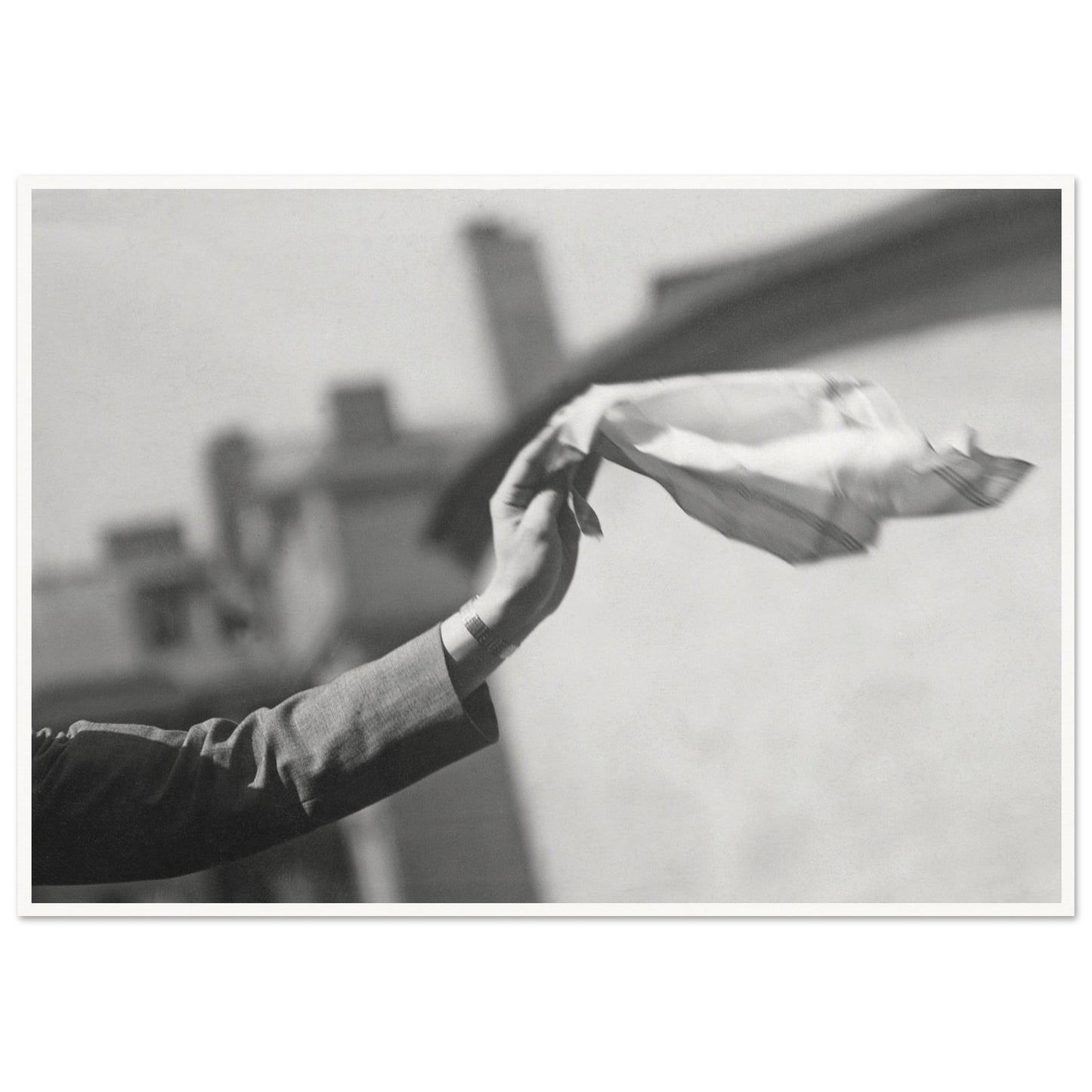
Waving goodbye with handkerchief in hand 1930 - Poster on museum quality matte paper
Choose whether you want to order the image printed within a white frame or as a full-bleed image. Depending on the format, the image may be cropped differently.
Regular price
€45,95 EUR
Regular price
Sale price
€45,95 EUR
Unit price
per
Tax included.
Shipping calculated at checkout.
Couldn't load pickup availability
Poster with a picture of someone waving goodbye with a handkerchief in the 1930s .
The handkerchief, this unassuming but versatile piece of cloth, was an indispensable companion in 1930s Sweden – a time when it was not only practical but also a symbol of style, class and emotion.
Usually square, often made of cotton or linen, the handkerchief varied in size between men and women. Men's handkerchiefs were slightly larger, sturdy enough for a serious sniff, while women's were often more delicate, sometimes adorned with lace edges or embroidered initials for an extra touch of elegance.
But the handkerchief was so much more than a tool for wiping the nose – it was a cultural icon, a fashion accessory and even a tool for expressing the heart. In the 1930s, the handkerchief was a natural part of everyday life. In the hustle and bustle of the city or on the quiet streets of the countryside, men could be seen tucking a neatly folded handkerchief into their jacket pocket, where it stood out like a small, well-kept trophy.
For women, the handkerchief was often an extension of their personality. A fine lady might have a whole collection of handkerchiefs, each chosen to match the outfit or mood of the day, and it was not uncommon for a handkerchief to be faintly scented with perfume, ready to be used to discreetly wipe a tear or brush away an unwanted scent.
But the role of the handkerchief extended beyond the everyday.
One of the most touching customs from this time was the use of the handkerchief as a farewell gesture.
As the train or boat began to move, those remaining would wave their handkerchiefs – a white, fluttering symbol of goodbye. This gesture was charged with emotion: a mixture of sadness, hope for reunion and a romantic feeling that today feels like something out of a black and white film. The handkerchief became an extension of the heart, a way of saying “I’m thinking of you” when the words could no longer be heard over the pounding of the train.
From today’s perspective, the handkerchief feels like a relic of a bygone era, replaced by paper tissues and a more practical approach to colds and tears. But there’s no denying its charm. In the 1930s, the handkerchief was an everyday luxury, a garment that could be both simple and extravagant, functional and sentimental. It reminded people that even the smallest details in life – like wiping your nose or waving goodbye – could be done with dignity and style. So the next time you see an old handkerchief in a box or at a flea market, think about its history: a small piece of cloth that carried big stories from a time when the world was a little more romantic, a little more formal, and definitely a lot more handkerchief-friendly.
Our master's edition, off-white, archival, museum-quality paper is uncoated and a premium choice for art enthusiasts who appreciate world-class quality to enjoy artwork in the most luxurious way.