Sjöberg Bildbyrå AB
Vasagatan in Stockholm in the 1940s - Premium poster with matte paper
Choose whether you want to order the image printed within a white frame or as a full-bleed image. Depending on the format, the image may be cropped differently.
Regular price
£54.00 GBP
Regular price
Sale price
£54.00 GBP
Unit price
per
Tax included.
Shipping calculated at checkout.
Couldn't load pickup availability
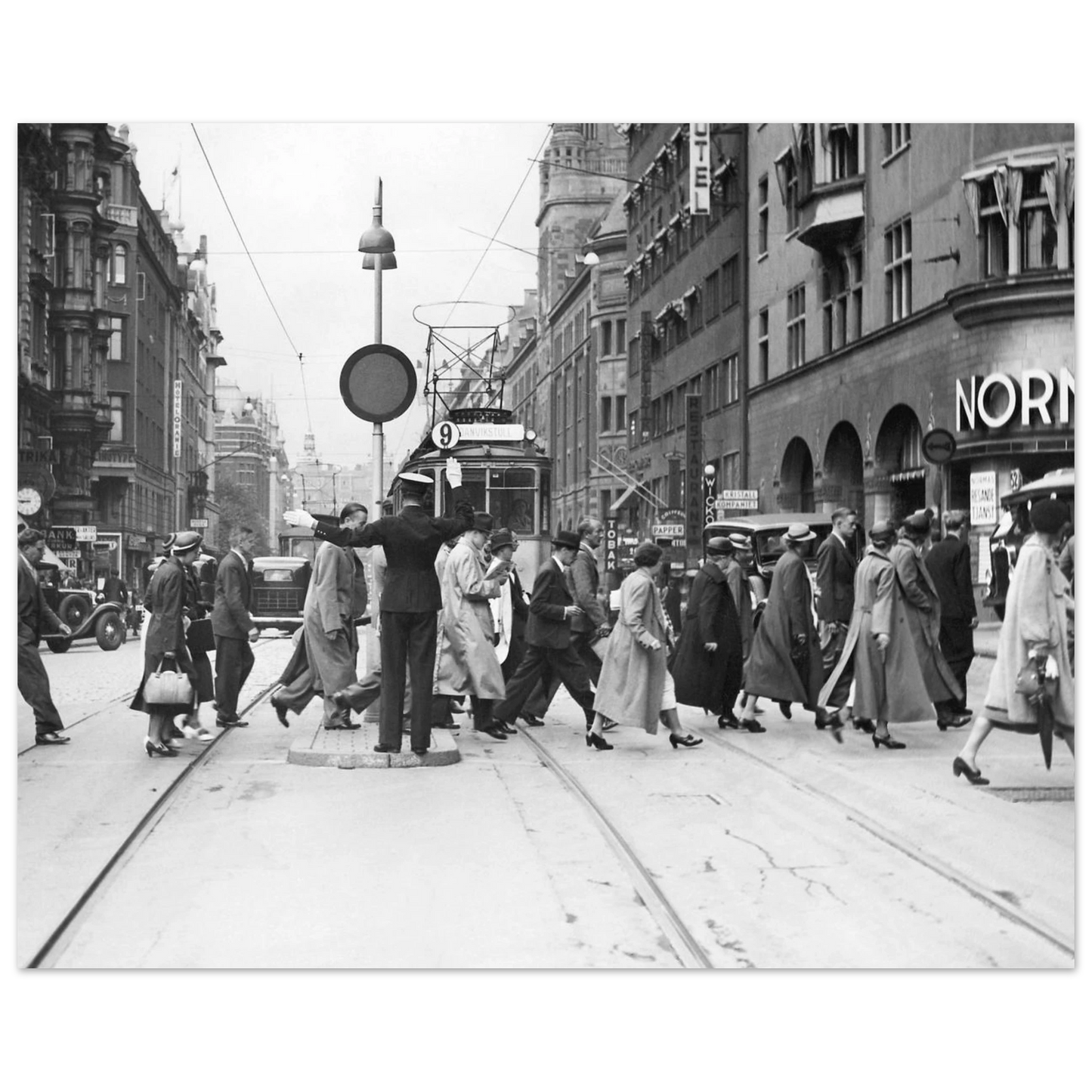
Poster with a picture from Vasagatan in the 1940s.
In the 1940s, Vasagatan in Stockholm was a lively artery, especially the stretch towards Norra Bantorget. The street was lined with stately buildings and vibrant city life. At Norra Bantorget stood the imposing LO-borgen, designed by Ferdinand Boberg and inaugurated in 1899. It became a symbol of the strength of the labor movement with its robust, classicist architecture. Along the street, you can also glimpse the Central Post Office, also designed by Boberg and inaugurated in 1903. This magnificent building in the neo-Renaissance style, with its detailed facade, was a cornerstone of the city's communication network and handled enormous amounts of mail at a time when letters were the lifeblood of society. Ferdinand Boberg, one of Sweden's foremost architects at the turn of the century, was known for his versatility and created iconic buildings such as the Nordic Museum and Rosenbad, characterized by elegance and functional beauty.
In the middle of the street stands a policeman, arms outstretched, directing traffic with authority. Pedestrians hurry across the street, while a tram heading towards Danvikstull waits, its bell ringing impatiently. Trams were the backbone of Stockholm's public transport at the time, and the line to Danvikstull was an important connection to the eastern parts of the city.
Along the street is a sign for Restaurang Norma, a popular chain in the mid-20th century. Norma was known for its affordable, well-prepared meals and had several branches in Stockholm. The restaurants attracted a wide audience – from office workers to passers-by – with their homely atmosphere and classic Swedish dishes, such as meatballs and fried herring. The chain was a part of everyday life in the city, but gradually disappeared in later decades.
The scene is a snapshot of 1940s Stockholm: a city in motion, where Boberg's architectural masterpieces, the LO-borgen and the Central Post Office, frame everyday life on Vasagatan, and where order, liveliness and human encounters coexist.
Our premium quality, heavier, white, matte paper has a natural, smooth, uncoated finish that feels luxurious to the touch.