Sjöberg Bildbyrå
The Running Boys of the 1940s - Poster on museum quality matte paper
Choose whether you want to order the image printed within a white frame or as a full-bleed image. Depending on the format, the image may be cropped differently.
Couldn't load pickup availability
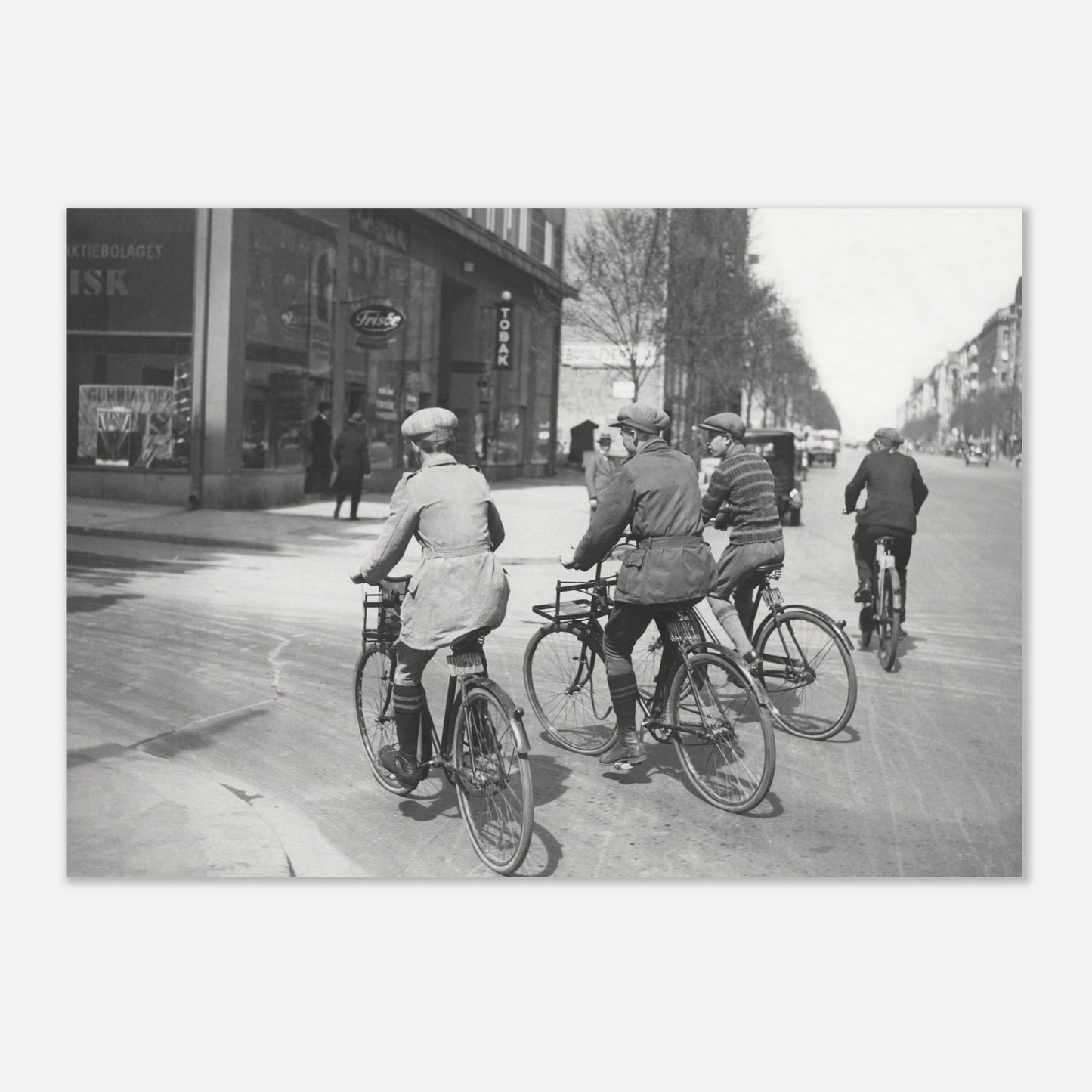
The four "chasers" are seen riding their bicycles on a street in Stockholm, ready to start the day. The profession of running boy or running chas was a good way for the young people to earn extra money. The work consisted of quickly getting through Stockholm traffic on sometimes overloaded bicycles with "shobb", that is, delivering everything from groceries to other homes to customers that companies received orders for.
The job did not require any vocational training and was for some time the subject of debate as it was believed that errand boy jobs had a negative impact on young people's long-term opportunities in the labor market.
The photo, taken in the 1940s, clearly shows what the bicycles looked like and how they were dressed.
In Stockholm in the 1940s, there were also around 150 telegram boys. Their job was to deliver the telegrams that were sent. One distinguishing feature was the yellow color of their bicycles. A telegram was a message or greeting that was transmitted via telephone or telegraphy and that upon receipt was printed on paper to be handed over to the recipient. The messages could contain everything from birthday greetings, business letters or other content that needed to go faster than letters.
In 1941, actor Åke Söderblom played the lead role in the comedy film "Springpojkar är vi allihopa" (We Are All Running Boys), which was set in the classic Klarakvarteren neighborhood. The plot revolved around bicycle messengers who competed with each other for jobs.
In 1947, the film "The Neighborhood's Unlucky Bird" premiered. The errand boys who have a central role in the film collect money for a friend. The film has a happy ending.
Our master's edition, off-white, archival, museum-quality paper is uncoated and a premium choice for art enthusiasts who appreciate world-class quality to enjoy artwork in the most luxurious way.